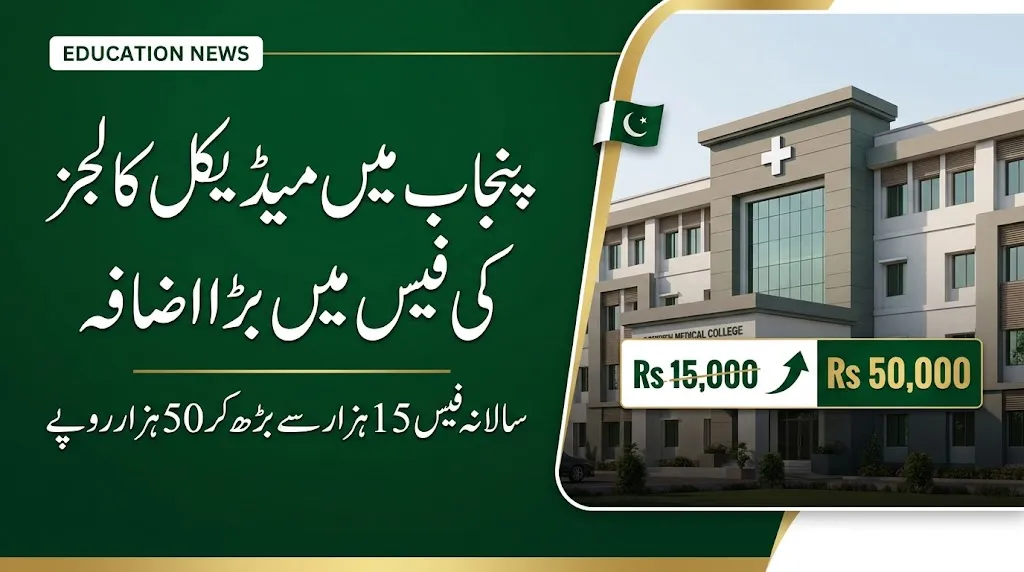
The annual tuition fee for open-merit seats at public-sector medical and dental colleges in Punjab has reportedly increased from Rs 15,000 to Rs 50,000 under the revised fee structure for 2026. The reported change marks a significant increase in the cost of medical education for students planning to pursue MBBS or BDS at government institutions.
The fee revision is likely to concern students and parents who depend on public medical colleges because of their comparatively affordable education. Although government institutions generally cost less than private medical colleges, higher tuition fees can add pressure to families already managing education, transport, accommodation, and other living expenses.
Students preparing for medical admissions should review the applicable fee schedule for their selected institution before making financial decisions.
Read Also : Islamabad Police Constable Jobs 2026: 1,540 Seats, Eligibility, Application Process and Last Date
What Is the New Government Medical College Fee in Punjab?
According to the reported fee revision, annual tuition for open-merit undergraduate medical and dental seats has increased to Rs 50,000 from the previous rate of Rs 15,000.
The main details are summarized below.
| Fee Detail | Previous Amount | Revised Amount |
|---|---|---|
| Annual tuition fee | Rs 15,000 | Rs 50,000 |
| Annual increase | — | Rs 35,000 |
| Percentage increase | — | Approximately 233.3% |
| New fee as a multiple of the old fee | — | Approximately 3.33 times |
The increase is approximately 233.3% based on the stated figures. The revised fee is about 3.33 times the previous amount, meaning students will pay Rs 35,000 more per year in tuition alone.
Important: The reported figures should be checked against the official notification issued by the relevant Punjab authorities. Students should also confirm which colleges, admission sessions, and categories of seats are covered by the revised fee structure.
Which Students May Be Affected by the Fee Increase?
The reported revision concerns open-merit undergraduate seats in government medical and dental institutions across Punjab. Students seeking admission to MBBS and BDS programmes should check whether the new rates apply to their specific institution and admission category.
The impact on individual students may differ depending on their college, fee category, scholarship eligibility, and additional charges.
| Student Category | What Students Should Check |
|---|---|
| MBBS applicants | Annual tuition and admission charges |
| BDS applicants | Applicable dental college fee schedule |
| Students applying on open merit | Whether the revised rate applies to their seats |
| Students from low-income families | Eligibility for need-based financial assistance |
| Students requiring hostel accommodation | Hostel, mess, and related expenses |
| Posted By | https://pak-all-job.com/ |
Students should not assume that every fee category has changed in the same way. The relevant institution’s official prospectus and fee notification should be treated as the final source of information.
How Will the Higher Fees Affect Students and Parents?
Public medical colleges attract thousands of applicants because they offer professional education at a lower cost than many private institutions. A substantial increase in tuition may therefore influence how families plan for medical education.
1. Greater Financial Pressure on Middle-Class Families
An additional Rs 35,000 in annual tuition can be difficult for families with limited disposable income. Parents may also need to cover examination charges, registration, books, transport, accommodation, and daily expenses.
For households supporting more than one student, the additional cost may require changes to their education budgets.
2. Affordability May Become a Bigger Concern
Admission to a government medical college depends on meeting the applicable admission requirements and merit criteria. However, securing a seat and being able to afford the full cost of studying are two different challenges.
Families with limited resources may need to plan more carefully before accepting admission, particularly when accommodation and travel costs are involved.
3. Students May Need to Explore Scholarships
Students facing financial difficulties should investigate need-based scholarships, institutional assistance, and other eligible funding options. They should confirm the application deadlines, eligibility requirements, and coverage before relying on financial support.
A fee increase does not automatically mean that scholarships or fee concessions have been withdrawn. Their availability must be checked separately.
What Is the Total Cost of Studying MBBS or BDS?
Tuition is only one part of the overall cost of medical education. Students should consider all applicable expenses when estimating how much they will need each academic year.
| Expense | What It May Include |
|---|---|
| Tuition fee | Annual charges for the academic programme |
| Admission and registration | Initial admission or university registration charges |
| Examination fees | Charges for examinations, where applicable |
| Books and study materials | Textbooks, stationery, and reference materials |
| Hostel accommodation | Room charges for students living on campus |
| Mess and food | Meals and other daily food expenses |
| Transport | Daily commuting or travel between home and college |
| Practical materials | Required learning or laboratory supplies, where applicable |
The exact total will depend on the institution and the student’s circumstances. Since the amounts for these additional expenses have not been specified in the reported revision, students should obtain a detailed fee breakdown from their selected college rather than relying on tuition alone.
Why Do Government Medical Colleges Charge Tuition Fees?
Public medical colleges require funding for teaching facilities, laboratories, libraries, clinical training, equipment, and the maintenance of campus infrastructure.
Changes in operating expenses can create pressure on institutional budgets. However, the reasons for a particular fee revision should be established through official statements or policy documents rather than assumptions.
For students and parents, two questions are especially important: why the increase was introduced and whether additional revenue will improve the quality of education and training.
Transparent fee policies can help families understand what they are paying for and allow students to plan their finances with greater confidence.
What Can the Punjab Government Do to Support Students?
As the cost of professional education changes, financial assistance can help ensure that deserving students are not excluded because of their household income.
Several measures could help reduce the financial pressure on eligible students:
- Need-based scholarships: Provide assistance to students whose families cannot comfortably afford tuition and essential study expenses.
- Fee concessions: Establish clearly defined relief options for eligible low-income students.
- Interest-free educational loans: Consider support programmes for students who need temporary financial assistance.
- Transparent fee notifications: Clearly explain revised charges, effective dates, and the students covered by the policy.
- Better access to information: Publish scholarship criteria, application deadlines, and contact details through official institutional channels.
These are potential policy measures, not confirmed announcements of new government programmes.
What Should Students Do Before Taking Admission?
Students planning to enter a public medical or dental college in Punjab should take a few practical steps before finalizing their admission.
- Check the official fee notification. Confirm the applicable annual tuition rate for the relevant admission session.
- Read the college prospectus. Review admission charges, examination fees, registration costs, and other mandatory payments.
- Calculate the yearly budget. Include accommodation, food, transport, books, and other expected expenses.
- Ask about financial assistance. Contact the college administration to determine whether scholarships or fee concessions are available.
- Confirm payment deadlines. Check the due dates and payment requirements to avoid missing an important admission deadline.
These steps can help families make informed decisions and avoid unexpected expenses after admission.
Frequently Asked Questions
What is the reported annual fee for government medical colleges in Punjab in 2026?
The reported revised annual tuition fee for open-merit seats is Rs 50,000, compared with the previous amount of Rs 15,000. Students should confirm the applicable rate through their institution’s official notification.
How much has the annual medical college tuition fee increased?
The stated annual fee has increased by Rs 35,000. This represents an increase of approximately 233.3% over the previous Rs 15,000 fee.
Does the reported fee increase apply to both MBBS and BDS?
The reported announcement covers open-merit undergraduate MBBS and BDS seats at government medical and dental institutions. Students should verify the policy’s exact scope with their selected college.
Will students have to pay Rs 50,000 for all college expenses?
No. The reported figure refers to annual tuition. Other charges, such as registration, examinations, accommodation, food, and transport, may be separate.
Can students from low-income families apply for financial assistance?
Students can check with their college and the relevant authorities for available need-based scholarships, fee concessions, and other assistance. Eligibility and funding arrangements depend on the specific programme.
Final Words
The reported increase in Punjab’s public medical college tuition fee from Rs 15,000 to Rs 50,000 a year could make financial planning more important for students seeking MBBS and BDS admission in 2026. The additional Rs 35,000 annual tuition cost may affect families differently depending on their income, accommodation needs, and eligibility for financial assistance.
Before making an admission decision, students should verify the revised fee through official channels, calculate the full cost of attendance, and explore any available support programmes. Clear information about fees and financial assistance will be essential for families preparing for medical education in Punjab.