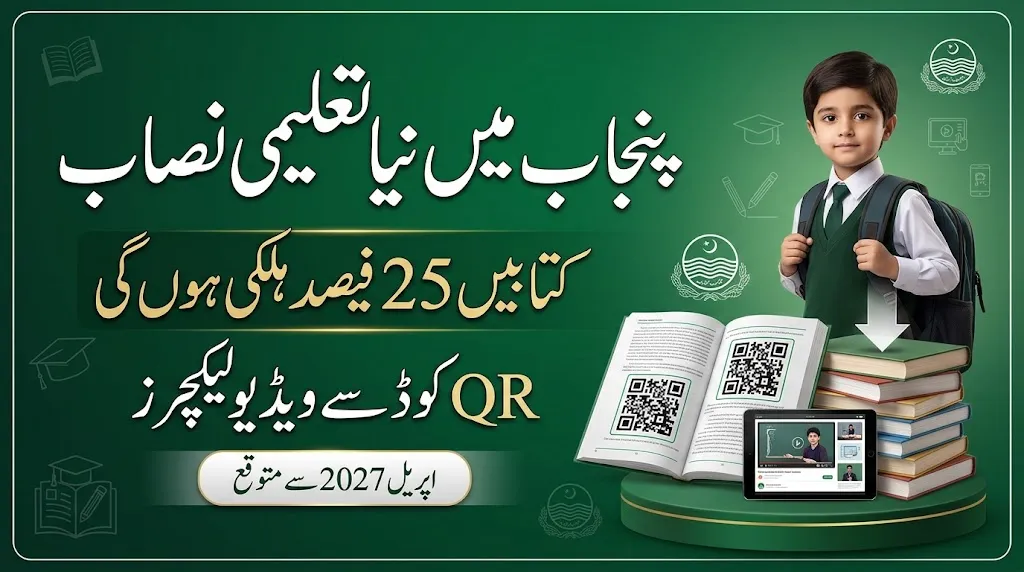
The Punjab government is planning major changes to the primary education system by introducing a revised curriculum from Early Childhood Care and Education (ECCE) to Grade 5. Under the proposed reforms, school textbooks will be 25% lighter, while QR code-based video lessons will be introduced to make learning easier and more interactive for young students.
The initiative is aimed at reducing the academic burden on primary schoolchildren and improving the quality of education through digital and conceptual learning. The revised curriculum is expected to be introduced from April 2027, at the beginning of the new academic session.
The proposed changes are expected to benefit students studying in both public and private schools across Punjab. The government also plans to bring educational content closer to international standards by reviewing the curriculum and introducing modern learning methods.
According to the available information, the revised curriculum has been prepared by the Punjab Education Curriculum, Training and Assessment Authority (PECTAA) and sent to Cambridge International Education authorities for assessment and comparison with international standards.
Read Also : Air University Spring 2027 Admissions Open for BS, MS, MBA and PhD Programs
پنجاب حکومت نے پرائمری تعلیم کے نظام میں اہم تبدیلیوں کا منصوبہ تیار کر لیا ہے، جس کے تحت اپریل 2027 سے ای سی سی ای (ECCE) سے پانچویں جماعت تک نیا نصاب متعارف کروانے کی توقع ہے۔ مجوزہ اصلاحات کے مطابق طلبہ کی درسی کتابوں کا حجم 25 فیصد تک کم کیا جائے گا، جبکہ کتابوں میں کیو آر کوڈز شامل کیے جائیں گے جنہیں اسکین کرکے بچے مختلف اسباق کی ویڈیو لیکچرز دیکھ سکیں گے۔ اس اقدام کا مقصد کم عمر طلبہ پر تعلیمی بوجھ کم کرنا، رٹہ سسٹم کی حوصلہ شکنی اور جدید ڈیجیٹل و تصوراتی تعلیم کو فروغ دینا ہے۔ پنجاب ایجوکیشن کریکولم، ٹریننگ اینڈ اسیسمنٹ اتھارٹی (PECTAA) کے مطابق نئے نصاب کو بین الاقوامی تعلیمی معیار کے مطابق جانچنے کے لیے متعلقہ حکام کو بھیجا گیا ہے۔ حتمی نصاب دسمبر 2026 میں تیار ہونے اور نئی کتابوں کی چھپائی جنوری 2027 میں شروع ہونے کی توقع ہے۔
Punjab New School Curriculum 2027 – Key Details
Here are the important details of the proposed education reforms:
| Details | Information |
|---|---|
| Initiative | Revised School Curriculum |
| Province | Punjab |
| Classes Covered | ECCE to Grade 5 |
| Textbook Reduction | 25% lighter |
| Digital Learning | QR code-based video lessons |
| Responsible Authority | PECTAA |
| Curriculum Review | Cambridge International Education |
| Final Curriculum Content | Expected in December 2026 |
| Textbook Printing | Planned for January 2027 |
| Expected Implementation | April 2027 |
Punjab Plans 25% Lighter Textbooks for Primary Students
One of the major features of the proposed curriculum is a 25% reduction in textbook volume.
For years, parents and educationists have raised concerns about the increasing academic pressure on primary schoolchildren. Many young students are required to carry multiple textbooks, notebooks, workbooks, grammar books, mathematics practice material, and other supplementary learning resources.
This can make schoolbags unnecessarily heavy and create difficulties for children, particularly those in the early stages of their education.
The Punjab government’s proposed textbook reduction aims to address this issue by making learning material more manageable for young students.
However, the actual impact will depend on how schools implement the revised curriculum. If educational institutions continue prescribing additional workbooks and supplementary material, students may not receive the full benefit of lighter textbooks.
Schools will also need to review their homework policies and examination practices to ensure that the reforms genuinely reduce academic pressure.
QR Code Video Lessons to Be Introduced in School Textbooks
Another important feature of the revised curriculum is the introduction of QR codes in textbooks.
Under this initiative, students will be able to scan QR codes printed alongside relevant lessons using smartphones or other digital devices. These codes will provide access to educational videos explaining different topics.
The digital learning system is expected to make difficult concepts easier to understand through visual explanations and demonstrations.
For example, students studying mathematics may be able to watch videos explaining difficult calculations, while science lessons could include visual demonstrations of different concepts.
The QR code-based learning system may also help students revise their lessons at home and understand topics at their own pace.
This approach will combine traditional textbook learning with digital educational resources.
Read Also : CM Distributes 6,161 Laptops and Honhaar Scholarship Cheques Among Students in Punjab
New Curriculum to Focus on Conceptual and Digital Learning
The proposed curriculum is not limited to reducing textbook size. The government also aims to improve the overall learning experience by encouraging conceptual understanding and digital education.
Under the traditional learning approach, students often focus heavily on memorising textbook content and preparing for examinations.
The revised curriculum is expected to place greater emphasis on understanding concepts, developing practical knowledge, and improving students’ learning abilities.
Digital video lessons will provide additional support by explaining topics through visual content rather than relying entirely on written material.
These changes could help young students develop a better understanding of their subjects and make classroom activities more engaging.
PECTAA Sends Revised Curriculum for International Assessment
According to a senior official of the Punjab Education Curriculum, Training and Assessment Authority (PECTAA), the revised curriculum has been prepared for Early Childhood Care and Education (ECCE) to Grade V.
The curriculum has been sent to Cambridge International Education authorities for assessment and comparison with international educational standards.
The review process is intended to help ensure that the revised educational content meets modern learning requirements.
The final curriculum content is expected to be ready in December 2026. After completing the necessary process, PECTAA plans to begin printing the revised textbooks in January 2027.
The books are expected to be available before the start of the new academic session in April 2027.
When Will Punjab’s New Curriculum Be Implemented?
According to the proposed timeline, the revised curriculum will be introduced in April 2027.
The government has planned several stages to prepare the new educational material before implementation.
| Expected Timeline | Planned Activity |
|---|---|
| December 2026 | Final curriculum content expected |
| January 2027 | Revised textbook printing planned |
| Before April 2027 | Textbooks expected to become available |
| April 2027 | Expected start of new curriculum |
The timeline indicates that the government intends to complete curriculum preparation and textbook printing before the beginning of the next academic session.
However, the final implementation will depend on the completion of the review, printing, and distribution process.
Read Also : Free Textbooks in Punjab: Major Reduction in Printing Despite More Students
Will the New Curriculum Reduce Students’ Academic Pressure?
The proposed reforms could provide relief to primary schoolchildren by reducing the volume of textbooks and introducing additional digital learning resources.
A lighter schoolbag may make daily school routines more comfortable, while video lessons could help students understand difficult topics without relying entirely on lengthy written explanations.
However, reducing textbook volume alone may not solve every problem related to academic pressure.
Schools will also need to consider the number of supplementary books, daily homework assignments, classroom activities, and examination requirements.
If these areas are addressed alongside the revised curriculum, the reforms could make a meaningful difference to students’ educational experiences.
Parents and teachers will also play an important role in helping children benefit from the new learning approach.
What Parents and Schools Should Expect
Parents of children studying in ECCE to Grade 5 can expect changes in textbooks and learning materials if the proposed reforms are implemented according to schedule.
Schools may also need to adjust their teaching methods to incorporate QR code-based video lessons and more concept-focused learning activities.
Teachers will likely need to guide students on how to use digital learning resources effectively.
Schools should also avoid adding unnecessary supplementary books that could increase students’ academic burden despite the proposed reduction in textbook volume.
Read Also : Sukkur IBA University Announces Graduate Admissions 2027 – Check Programs and Dates
Frequently Asked Questions (FAQs)
When will Punjab introduce the new school curriculum?
The revised curriculum is expected to be introduced in April 2027, subject to completion of the required preparations.
How much lighter will the new textbooks be?
Under the proposed reforms, textbooks for ECCE to Grade 5 are planned to be 25% lighter.
Which classes will be covered under the revised curriculum?
The new curriculum has been prepared for Early Childhood Care and Education (ECCE) to Grade 5.
Will the new textbooks include QR codes?
Yes. The proposed textbooks will include QR codes that students can scan to access video lessons related to their subjects.
Which authority is preparing the revised curriculum?
The Punjab Education Curriculum, Training and Assessment Authority (PECTAA) is responsible for preparing the revised curriculum.
When will the new textbooks be printed?
PECTAA plans to begin printing the revised textbooks in January 2027.
Will the new curriculum be introduced in private schools?
The reforms are aimed at the primary education system across Punjab. However, the implementation requirements for public and private schools will depend on the government’s final instructions.
Will the new curriculum reduce homework?
The announced reforms focus on lighter textbooks and digital, conceptual learning. A specific reduction in homework has not been confirmed.
Final Words
Punjab’s proposed education reforms could bring important changes to primary education by reducing textbook volume, introducing QR code-based video lessons, and encouraging conceptual learning. If implemented effectively from April 2027, the initiative could help reduce unnecessary academic pressure and make education more engaging for young students.
The success of the new curriculum will depend on its implementation in schools, the availability of digital learning resources, and cooperation between teachers, parents, and educational authorities.