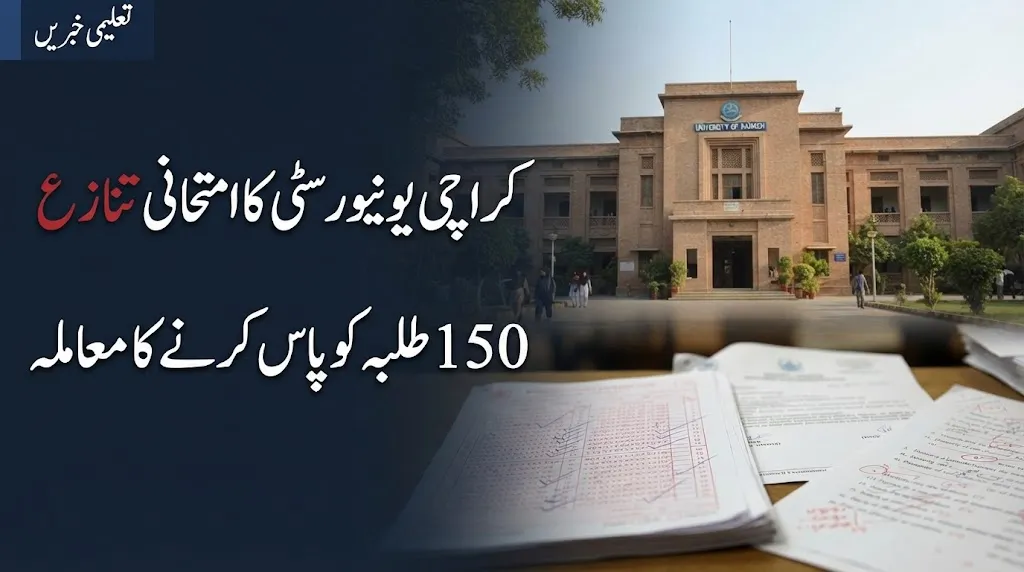
Karachi (KU) is facing an academic controversy following reports that around 150 students from affiliated law colleges received passing marks after initially failing their examinations. The reported changes have raised concerns about examination rules, result transparency, and fairness in Pakistan’s legal education system.
The controversy reportedly involves students from S.M. Law College and Islamia Law College who appeared in BA LLB examinations. According to the information available, some students who had received very low marks in subjects including Obligations and Pakistan Studies later received revised scores ranging from 50 to 65 marks.
The reported changes have prompted questions about how the results were reviewed and whether the university followed its established examination procedures. However, the allegations and the circumstances surrounding individual results require verification through official university records and any formal inquiry findings.
Read Also : Punjab PERA Jobs 2026: 1,010 Sergeant Vacancies – Eligibility, Physical Test and Online Apply
Key Details of the Karachi University Result Controversy
The following table summarizes the main details reported about the case.
| Detail | Information |
|---|---|
| University | University of Karachi |
| Students involved | Around 150, according to reports |
| Colleges mentioned | S.M. Law College and Islamia Law College |
| Examinations | BA LLB examinations |
| Subjects mentioned | Obligations and Pakistan Studies |
| Reported revised marks | Approximately 50 to 65 in some cases |
| Main concern | Whether result revisions followed university examination rules |
| Reported committee meeting | August 5 |
| Reported approval | August 6 |
| Posted By | https://pak-all-job.com/ |
These details reflect the reported allegations and should not be treated as a final finding of wrongdoing by the university or any individual.
Why Were Failed Students Reportedly Given Passing Marks?
The main question concerns the process used to change the examination results. Reports suggest that some students initially received failing marks, including extremely low scores, before their results were revised following an administrative and academic review.
Such a significant change naturally raises questions about the basis for the revised marks. Students, parents, teachers, and other stakeholders may want to know whether the original answer sheets contained marking errors, whether the review involved a permitted reassessment, and what evidence supported the changes.
A clear explanation from the university would help establish whether the revisions resulted from legitimate corrections or whether the prescribed rules were not followed.
It is important to distinguish between correcting an examination error and changing a result without an appropriate academic basis. The two situations are not the same, and the available information alone does not establish which circumstances applied to every student involved.
Questions Raised About the Scrutiny Committee
According to reports, a committee reviewed an LLB Part II examination paper during a meeting held on August 5, with approval reportedly granted the following day. The committee was said to include university and law college representatives, including the law dean and the examinations controller.
The scope of the decision has also attracted attention. Reports indicate that the wording “other related cases” may have been used in connection with the review, potentially extending the decision beyond the paper initially discussed to include Pakistan Studies results.
This has raised questions about how the committee defined the cases eligible for review and what authority it had to recommend changes.
For a matter involving university examination results, the minutes of the meeting, the applicable examination regulations, and the written approval would be important documents for understanding the decision. Without examining these records, it would be premature to draw a final conclusion about whether the committee acted within its authority.
Former Vice Chancellor Questioned the Review Process
Former University of Karachi Vice Chancellor Dr. Khalid Iraqi reportedly said that he had previously rejected a similar collective request from students.
According to the account provided, Dr. Iraqi referred to university examination rules that permit the recounting of marks but do not necessarily allow a full reassessment of answer scripts through the same procedure.
This distinction is central to the controversy.
Recounting and rechecking are not always the same as reassessment. A recount generally concerns the calculation and recording of marks, while a reassessment may involve evaluating answers again. The precise meaning and permitted procedure depend on the university’s applicable rules.
The key issue, therefore, is whether the reported revisions were made under a procedure authorized by the university’s regulations. The relevant rules and official records would need to be reviewed before reaching a definitive conclusion.
What Did S.M. Law College’s Principal Say?
S.M. Law College Principal Prof. Fareed Dayo reportedly defended the committee’s decision. He argued that a substantial number of students had been unfairly failed by a teacher associated with Islamia College and that the review was intended to address problems in the marking process.
According to the reported explanation, approximately 180 students may have been affected by the original evaluation. This figure differs from the reports referring to around 150 students who allegedly received revised passing marks, so the two numbers should not automatically be treated as representing the same group.
The defense presented by the college leadership suggests that the review was intended to provide relief to students who may have received incorrect marks.
Other administrative explanations reportedly maintained that the decision concerned students who had narrowly missed passing marks, rejecting claims that students with zero marks were simply awarded passes.
These competing accounts underline the need for a transparent explanation of the review criteria, the original marks, the revised marks, and the reasons behind each change.
New University Leadership Faces Pressure to Clarify the Matter
The controversy has emerged during a period of leadership changes at the University of Karachi. According to the reports, Dr. Waseem Qazi took over as vice chancellor after a series of temporary leadership arrangements.
The university’s administration now faces questions about how the reported revisions were authorized and whether the process complied with the relevant examination regulations.
A transparent response could help clarify the situation for students, faculty members, and the wider public. This could include publishing the applicable rules, explaining the committee’s authority, and clarifying the basis for any revised results, subject to appropriate privacy protections.
If an official investigation is initiated, its findings would be important in determining whether the matter involved legitimate correction of marking errors, procedural shortcomings, or other issues.
At present, the allegations should not be treated as proof that any named official or institution committed misconduct.
What Could This Mean for Law Students?
The controversy is important because university examination results can affect students’ academic progress, future admissions, and professional plans. For law students in particular, confidence in the fairness of examinations is an important part of maintaining trust in legal education.
If students were unfairly failed because of marking errors, a proper review process could help protect their academic rights. On the other hand, if results were changed without following established rules, the situation could raise concerns about equal treatment and academic standards.
A fair system must protect students from both incorrect marking and unauthorized changes to examination results.
The university can help address these concerns by clearly explaining the review procedure and ensuring that students in comparable circumstances are treated consistently.
Read Also : Punjab Board 11th Class Result 2026: Check 1st Year Date and Time
What Should Be Clarified Next?
Several questions remain important for understanding the case:
- What specific examination rules governed the review of the affected answer sheets?
- Did the committee have the authority to reassess the papers or only to review the counting of marks?
- How many students had their marks changed, and how many ultimately received passing grades?
- What evidence supported the revised marks?
- Has the university issued an official statement or initiated a formal inquiry?
- Will the findings, if any, be made public?
Answers to these questions would help separate confirmed facts from allegations and competing explanations.
Conclusion
The reported Karachi University result controversy has brought renewed attention to examination transparency and fairness in higher education. Reports of substantial changes to the marks of law students have raised questions about the scrutiny process, the authority of the review committee, and the application of university examination rules.
However, the competing explanations mean that a final judgment should depend on official records and verified findings rather than allegations alone.
A clear explanation from the University of Karachi would help students and the public understand why the results were revised and whether the decisions complied with the applicable rules. Ensuring a fair, consistent, and transparent examination system remains essential for protecting students’ rights and maintaining confidence in higher education in Pakistan.