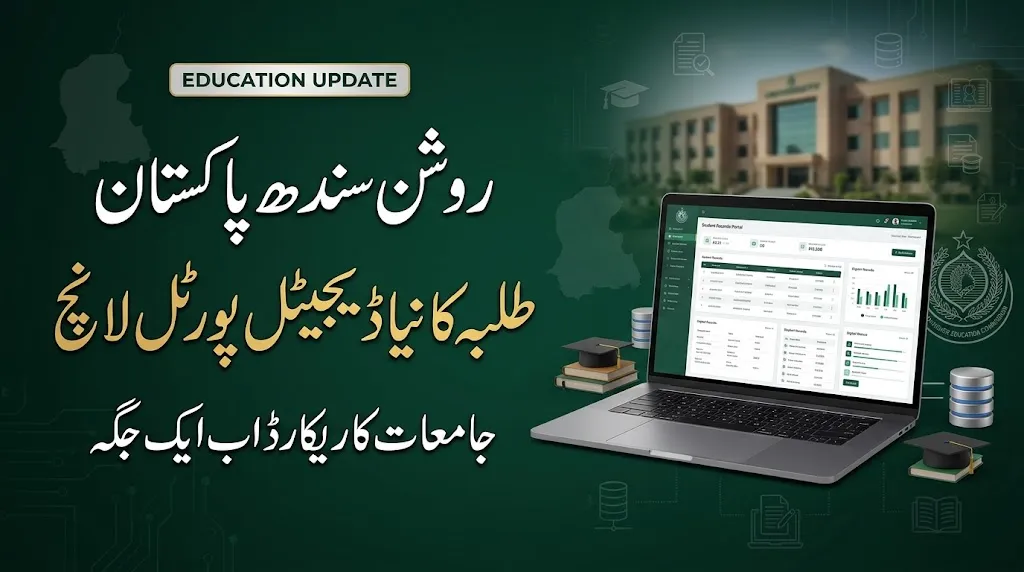
The Sindh Higher Education Commission (HEC) has launched a new digital platform called Roshan Sindh Pakistan to improve the management of university student records across the province.
The initiative introduces Sindh’s first centralized portal for maintaining student information from both public and private universities. It aims to bring student data together in one place and make the process of collecting, checking, and managing university records easier.
Under the new system, universities will receive their own accounts to upload student information directly to the portal. The platform is designed to handle large amounts of data while reducing manual work and administrative difficulties.
Read Also : Punjab Smart Syllabus 2026: Important Update for Matric and Intermediate Students
سندھ ہائر ایجوکیشن کمیشن (HEC) نے صوبے کی سرکاری اور نجی جامعات کے طلبہ کا ریکارڈ ایک ہی جگہ محفوظ اور منظم کرنے کے لیے نیا ڈیجیٹل پورٹل روشن سندھ پاکستان (Roshan Sindh Pakistan) متعارف کرا دیا ہے۔ یہ سندھ کا پہلا مرکزی نظام ہے جس کے ذریعے تمام جامعات طلبہ کا ڈیٹا براہِ راست اپ لوڈ کر سکیں گی۔ نئے نظام کے تحت ہر یونیورسٹی کو الگ اکاؤنٹ فراہم کیا جائے گا، جس کے ذریعے ایک مرتبہ میں ایکسل فائل کی مدد سے 60 ہزار تک طلبہ کا ریکارڈ اپ لوڈ کیا جا سکے گا۔ پورٹل خودکار طریقے سے فراہم کردہ معلومات کی جانچ کرے گا، ڈپلیکیٹ اندراجات کی نشاندہی کرے گا اور تفصیلی رپورٹس بھی تیار کرے گا۔ اس اقدام کا مقصد جامعات کے انتظامی امور کو آسان بنانا، طلبہ کے ریکارڈ میں شفافیت لانا اور سندھ میں اعلیٰ تعلیم کی بہتر منصوبہ بندی اور معیار کو فروغ دینا ہے۔
How Will the Roshan Sindh Pakistan Portal Work?
According to the available information, each university will receive a dedicated account through which it can submit student records.
Institutions will also be able to upload up to 60,000 student records in a single attempt using a specified Excel template.
Once the data is uploaded, the system will automatically check the information and identify possible errors or duplicate entries.
This will help universities manage their records more efficiently without repeatedly preparing student information in different formats.
Key Features of the Roshan Sindh Pakistan Portal
The new portal includes several features designed to improve data management and transparency.
Here is an overview of its main functions:
| Feature | Details |
|---|---|
| Centralized Database | Maintains student records from public and private universities |
| Dedicated Accounts | Each university receives its own portal account |
| Bulk Data Upload | Supports up to 60,000 records in one upload |
| Excel Template | Allows institutions to submit data using a standard format |
| Automatic Validation | Checks uploaded information for errors |
| Duplicate Detection | Helps prevent repeated student entries |
| Detailed Reports | Generates reports from submitted information |
| Secure Access | Provides controlled access to the system |
| Audit Trail | Maintains a record of data uploads for accountability |
Why Has Sindh HEC Introduced This New System?
The launch of Roshan Sindh Pakistan addresses a long-standing challenge in the province’s higher education sector: the lack of a centralized system for managing university student information.
Previously, collecting and maintaining records from different institutions could involve separate formats and administrative processes.
The new platform aims to bring this information together in a standardized digital system.
According to officials, having reliable and updated student records will help Sindh HEC make better decisions about higher education planning and institutional performance.
Read Also : Punjab Orders Physical Verification of Students in All Private Schools Across 41 Districts
How Will the Portal Benefit Universities?
The new system is expected to reduce the administrative workload of public and private universities.
Institutions will no longer need to prepare student information in multiple formats for different reporting requirements. Instead, they can use the provided Excel template to upload records directly.
The automatic validation feature will also help reduce data entry mistakes and duplicate information.
Some expected benefits for universities include:
- Easier submission of student records.
- Faster processing of large datasets.
- Reduced manual paperwork.
- Fewer errors and duplicate entries.
- Standardized student information.
- Better reporting and record management.
How Will Roshan Sindh Pakistan Help Improve Higher Education?
The centralized portal is not only intended to make administrative work easier. It is also expected to support better planning across Sindh’s higher education sector.
With student information available in one system, Sindh HEC will be better positioned to monitor enrollment trends and understand changes in university admissions and student populations.
The data can also support quality assurance activities and help officials make decisions based on more reliable information.
A centralized record system may therefore improve coordination between the higher education commission and universities across the province.
Read Also : BSEK PM Chromebook Scheme Merit List Announced
Is Roshan Sindh Pakistan Available for Students?
Based on the available announcement, the portal is designed primarily for universities to upload and manage student records through dedicated institutional accounts.
The announcement does not confirm a separate student login facility or public access to individual academic records.
Students should therefore wait for further official information before assuming they can access their personal records through the platform.
Final Words
The launch of Roshan Sindh Pakistan marks an important step towards digitalizing student record management in Sindh’s higher education sector.
Through centralized data collection, bulk uploads, automatic validation, duplicate detection, and detailed reporting, the new system aims to make university administration more efficient and transparent.
The initiative is also expected to help Sindh HEC improve enrollment monitoring, educational planning, and quality assurance across public and private universities.
Its long-term impact will depend on how effectively universities adopt the system and maintain accurate student information.