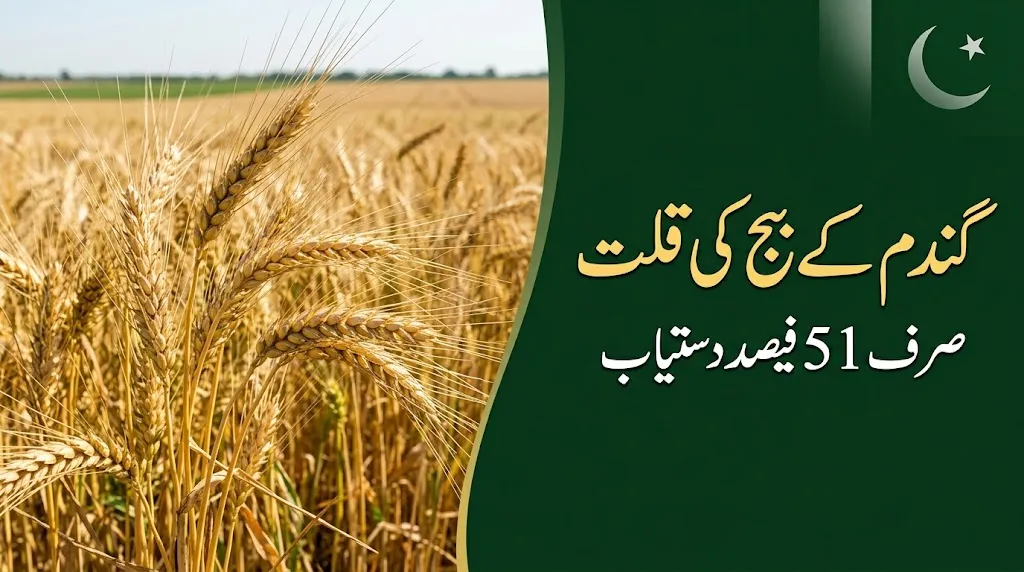
Pakistan is facing a major challenge ahead of the 2026-27 Rabi season, as available wheat seed stocks cover only 51% of the country’s total requirement. The shortage has raised concerns about seed affordability, timely distribution, and farmers’ ability to prepare for the upcoming wheat crop.
According to figures shared in an official government statement, Pakistan has 611,793 tons of wheat seed available against a national requirement of 1,191,555 tons. This leaves a substantial gap just as farmers prepare their fields for sowing.
The Ministry of National Food Security and Research has urged private seed companies to reduce prices and help ensure that farmers can obtain seed on time. The government is also focusing on improving distribution between provinces and encouraging the use of certified, high-quality wheat seed.
The situation is particularly important for small farmers, who must manage seed, fertilizer, irrigation, and other farming expenses within limited budgets.
Read Also : Punjab PERA Jobs 2026: 1,010 Sergeant Vacancies – Eligibility, Physical Test and Online Apply
Pakistan Wheat Seed Availability 2026-27: Key Figures
The latest figures show that Pakistan has a significant wheat seed supply gap for the upcoming Rabi season.
| Details | Quantity |
|---|---|
| Total wheat seed requirement | 1,191,555 tons |
| Available wheat seed | 611,793 tons |
| Requirement covered | Approximately 51% |
| Estimated shortage | 579,762 tons |
| Posted By | https://pak-all-job.com/ |
The available quantity falls short of the national requirement by approximately 579,762 tons. This means that nearly half of the estimated seed requirement remains uncovered by the reported available stocks.
However, a shortage in reported seed availability does not automatically mean that the same proportion of farmland will remain unsown. Farmers may use different seed sources, while actual planting decisions will depend on availability, quality, prices, weather, and other agricultural conditions.
Province-Wise Wheat Seed Availability in Pakistan
The provincial figures show considerable differences in reported wheat seed availability. Punjab has the largest available supply, while Khyber Pakhtunkhwa, Balochistan, and Sindh face substantial gaps relative to their respective requirements.
| Province | Available Wheat Seed | Requirement Covered |
|---|---|---|
| Punjab | 553,008 tons | 67% |
| Sindh | 40,873 tons | 23% |
| Khyber Pakhtunkhwa | 7,458 tons | 7% |
| Balochistan | 10,451 tons | 13% |
Source: Provincial figures reported in the supplied information. The percentages represent the reported share of each province’s seed requirement covered by available stocks.
Punjab Has the Largest Available Supply
Punjab accounts for the largest share of the reported wheat seed stocks, with 553,008 tons available to cover 67% of its requirement.
Despite having a stronger supply position than the other listed provinces, Punjab still faces a gap between available seed and estimated demand. Affordable prices and timely delivery will remain important for farmers preparing for the wheat sowing season.
Sindh Faces a Significant Supply Gap
Sindh has 40,873 tons of wheat seed available, enough to cover 23% of its reported requirement. The figures indicate that the province needs additional seed availability or other effective supply arrangements before sowing progresses.
Farmers may face greater difficulty if suitable seed is expensive or difficult to obtain locally.
Khyber Pakhtunkhwa Has the Lowest Coverage
Khyber Pakhtunkhwa has reported availability of 7,458 tons, covering only 7% of its wheat seed requirement. This is the lowest coverage among the four provinces listed.
The figures highlight the importance of improving distribution and ensuring that suitable wheat seed reaches farmers in time for their local sowing schedules.
Balochistan Also Needs Better Seed Availability
Balochistan has 10,451 tons of wheat seed available, covering 13% of its reported requirement. The province’s low coverage makes timely supply and distribution particularly important.
Local availability, transport arrangements, and the suitability of seed varieties for regional growing conditions will all matter when farmers make their planting decisions.
Government Asks Private Seed Companies to Reduce Prices
National Food Security Minister Rana Tanveer Hussain chaired a meeting with private seed companies and the National Seed Development and Regulatory Authority (NSDRA) to discuss wheat seed prices and supply arrangements.
The meeting focused on reducing the financial burden on farmers and helping seed reach different parts of the country without unnecessary delays.
The government has emphasized the need for closer coordination among seed suppliers, regulatory authorities, and provincial administrations. Better coordination could help address distribution problems and improve access to suitable seed during the critical sowing period.
Reducing seed prices is also an important concern because farmers must pay for several agricultural inputs at the same time. When seed becomes too expensive, some farmers may struggle to purchase the quantity or quality they need.
The effectiveness of these measures will depend on actual price changes, available stocks, and how quickly seed reaches farming communities.
Why Certified Wheat Seed Matters
Certified wheat seed is important because it provides farmers with greater assurance about varietal identity, quality, and compliance with applicable seed standards.
The government has identified the limited use of certified wheat seed as one of the challenges affecting wheat production. It is encouraging the development and distribution of high-yielding, disease-resistant, and climate-resilient varieties through research and seed multiplication programmes.
Choosing suitable seed can help farmers make better planting decisions, but the results also depend on soil conditions, weather, irrigation, fertilizer management, and other farming practices.
Farmers should purchase seed from reliable suppliers and check the variety name, certification or quality markings, packaging, and relevant information before buying. They should also confirm that the variety is suitable for their local conditions and recommended sowing period.
How the Wheat Seed Shortage Could Affect Farmers
The current shortage could create several challenges if additional supplies do not reach farmers in time.
Higher farming costs: If demand exceeds local availability, farmers may face difficulty finding affordable seed. Any price increase could add pressure to already limited budgets.
Delayed sowing: Farmers who cannot obtain suitable seed at the right time may have to reconsider their planting schedules. The effects will depend on local weather and recommended sowing windows.
Risk of lower-quality seed purchases: Farmers under financial pressure may be tempted to purchase unverified seed. Using unsuitable or poor-quality seed can create avoidable production risks.
Uneven provincial access: The reported coverage varies considerably between provinces. This makes distribution planning important so that available supplies reach areas where farmers need them most.
These are potential risks rather than confirmed outcomes. The actual effect on wheat production will depend on how the seed supply situation develops during the sowing season.
Wheat Seed Availability Was Also Limited Last Season
The reported shortage is not entirely new. During the 2025-26 Rabi season, Pakistan had 574,329 tons of wheat seed available, again covering approximately 51% of the estimated national requirement.
For 2026-27, reported availability has increased to 611,793 tons. That is an increase of 37,464 tons compared with the previous season’s reported quantity.
| Rabi Season | Reported Available Seed | Share of Requirement Covered |
|---|---|---|
| 2025-26 | 574,329 tons | Approximately 51% |
| 2026-27 | 611,793 tons | Approximately 51% |
Although the available quantity has increased, the reported coverage remains around the same level. This suggests that the gap between seed supply and estimated demand continues to require attention.
The figures alone do not establish why the shortage has persisted. A fuller assessment would require updated information on seed production, carryover stocks, demand estimates, certified seed use, and distribution across provinces.
What Farmers Should Check Before Buying Wheat Seed
Farmers preparing for the 2026-27 Rabi season can take several practical steps to reduce avoidable risks.
- Check local availability: Contact reputable seed dealers or relevant agricultural offices to find out which suitable varieties are available.
- Compare prices: Check prices from multiple reliable suppliers before making a purchase.
- Verify seed quality: Examine packaging, variety information, and applicable certification or quality labels.
- Choose suitable varieties: Seek advice on varieties appropriate for local soil, climate, and disease risks.
- Follow local sowing guidance: Consult provincial agricultural extension services for recommended planting times and crop management advice.
- Avoid unverified claims: Be cautious of sellers promising unusually high yields without credible supporting information.
Farmers should also consider their complete production budget rather than focusing only on seed prices. Fertilizer, irrigation, land preparation, and other expenses can affect the amount they can reasonably spend on seed.
What Happens Next?
The next important developments will be whether seed companies reduce prices, whether additional supplies become available, and whether distribution improves across provinces before and during the sowing period.
The government has highlighted coordination between private suppliers, the NSDRA, and provincial authorities as part of its response. The reported figures, however, do not confirm how much additional seed will become available or whether the national supply gap will narrow in the coming weeks.
For farmers, access to affordable and suitable seed at the right time remains the immediate concern. For policymakers, the challenge is to improve seed availability while supporting quality standards and maintaining a reliable supply chain.
The reported shortage also underlines the importance of long-term planning for seed production, certified varieties, research, and distribution ahead of future wheat seasons.
Frequently Asked Questions
How much wheat seed is available in Pakistan for the 2026-27 Rabi season?
Pakistan has 611,793 tons of wheat seed available against an estimated requirement of 1,191,555 tons, according to the figures reported for the season.
What percentage of Pakistan’s wheat seed requirement is available?
The reported available stock covers approximately 51% of the national requirement.
Which province has the highest wheat seed availability?
Punjab has the largest reported available supply, with 553,008 tons covering 67% of its estimated requirement.
Which province has the lowest wheat seed coverage?
Khyber Pakhtunkhwa has the lowest reported coverage among the four provinces listed, at 7% of its estimated requirement.
Why is the government asking seed companies to reduce prices?
The government wants to reduce farmers’ production costs and improve access to wheat seed before the sowing season. Affordable seed is especially important for small farmers managing several agricultural expenses.
What should farmers consider when purchasing wheat seed?
Farmers should check seed quality, variety suitability, reliable supplier information, prices, and local agricultural recommendations before purchasing.
Final Words
Pakistan’s wheat seed shortage is an important concern as the 2026-27 Rabi sowing season approaches. Reported availability covers only 51% of the estimated national requirement, with major differences in provincial coverage.
The government’s focus on affordable prices, improved distribution, and certified seed could help address some of the challenges, but the outcome will depend on implementation and the availability of additional supplies.
For farmers, the priority is to obtain suitable, good-quality seed on time and make purchasing decisions based on reliable local information. Further updates on seed stocks, prices, and provincial distribution will help clarify whether the supply gap improves as the season progresses.